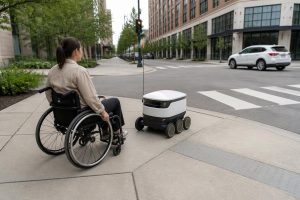



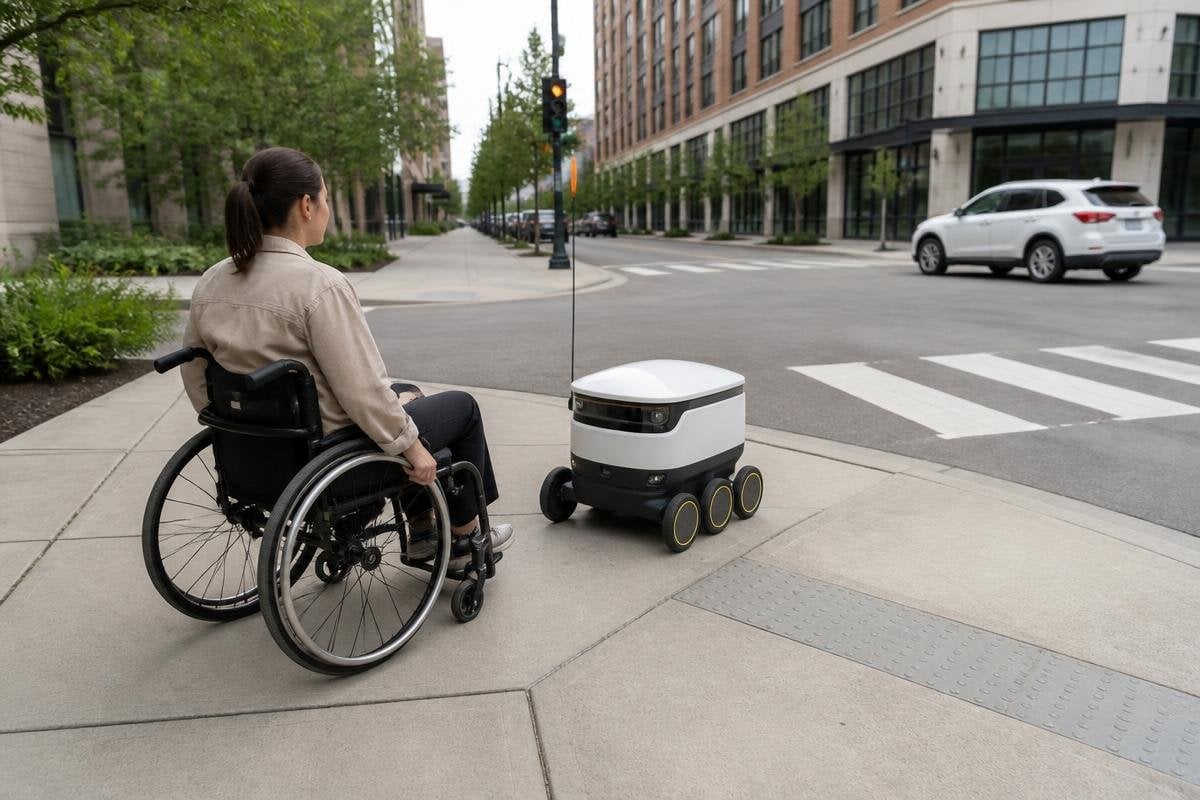
A mobility robot can carry groceries, move a wheelchair user, or guide someone across a large public site. It still depends on curb ramps, clear paths, safe crossings, and rules that let it operate beside people.
Quick read
- A robot can reduce effort for short trips, but it cannot repair a blocked sidewalk.
- Cameras, LiDAR, and remote help need clear safety rules in public spaces.
- City trials should measure completed trips, delays, near misses, and access for people with different needs.
Where mobility robots can help
Mobility robots cover several different jobs. A powered platform may carry a person over a short route. A small delivery robot may move food, medicine, or a bag to a building entrance. A guide robot may give spoken directions through a station, hospital, or campus.
The useful feature is controlled movement. A robot can keep a steady speed, stop when an obstacle appears, and follow a mapped route. For someone with limited stamina, that may turn a long walk into a trip they can complete.
The benefit depends on the task. A delivery robot helps when it reaches the correct entrance and hands over the load without blocking the path. A ride robot helps when its seat, controls, ramp, and turning space work for the person using it. A machine that reaches only smooth private paths has limited value in a city.
The street is part of the robot
A robot on public pavement needs more than motors and sensors. Its route may include a curb cut, a crossing signal, a narrow footpath, a bus stop, and a door.
Each part can change the trip time or stop the robot altogether.
LiDAR measures distance with laser pulses. Cameras help classify objects, signs, and road markings. Together, these sensors can help a robot detect a person, a bicycle, or a parked vehicle. They don’t remove the need for safe route design, clear signs, or a person who can take control when the robot gets stuck.
Access also includes the people around the machine. Public machines should leave enough space for a wheelchair, a guide dog, a stroller, or someone walking with a cane. Its warning sounds should be easy to hear without adding noise that makes a public place harder to use.
A city trial should record more than whether the robot reaches its destination. It should show curb cuts, crossing times, stop events, blocked paths, and the help a passenger needed; reports on mobility robots from Robot24.com can point you to named trials and stated limits before the hard limits section.
The hard limits
Public streets change from one block to the next. Rain can reduce camera visibility. Road works can close a mapped path. A delivery vehicle may stop across a ramp. A crowd can make the route too slow for the robot’s safety settings.
Remote assistance can help with these cases, but it changes the cost and staffing plan. A person may need to watch several robots, answer calls, or guide one machine through a difficult section. A city trial should report those interventions rather than count only successful trips.
Privacy needs attention too. Sensors may record faces, license plates, voices, or the layout of private property. Operators need a clear rule for what the robot stores, how long it keeps the data, and who can see it. Without that information, public acceptance will be hard to judge.
There is also a basic safety question: who is responsible when a robot blocks a ramp or causes a person to step into traffic? City agencies, operators, manufacturers, and property owners need that answer before regular service begins.
A practical city trial checklist
Use these checks before a city treats a mobility robot as public access equipment:
- Choose routes that include real curbs, crossings, doors, and surface changes
- Test with people who use wheelchairs, canes, walkers, or guide dogs
- Record failures such as blocked paths, sensor errors, remote takeovers, and missed doors
- Measure trips by completion rate, delay, distance, and staff time
- Publish data rules for video, audio, location records, and deletion
- Set a response plan for crashes, stalled robots, complaints, and emergency access
These checks connect the machine to the service people actually receive. They also give city staff a way to compare a robot trial with a ramp repair, a shuttle, or more human assistance.
I’d support mobility robots in cities when they add a clear travel option and the city fixes the route around them. A pilot should earn regular use through completed trips and safe handoffs, not through a polished demonstration.